Senior Research Technician
Hilliard lab
Queensland Brain Institute
"Growing up, I thought being a scientist meant being an analytical, logic-driven person. You might have thought this too. But, research is deeply creative, and it is often curiosity, imagination and lateral thinking that lead to our most profound discoveries."
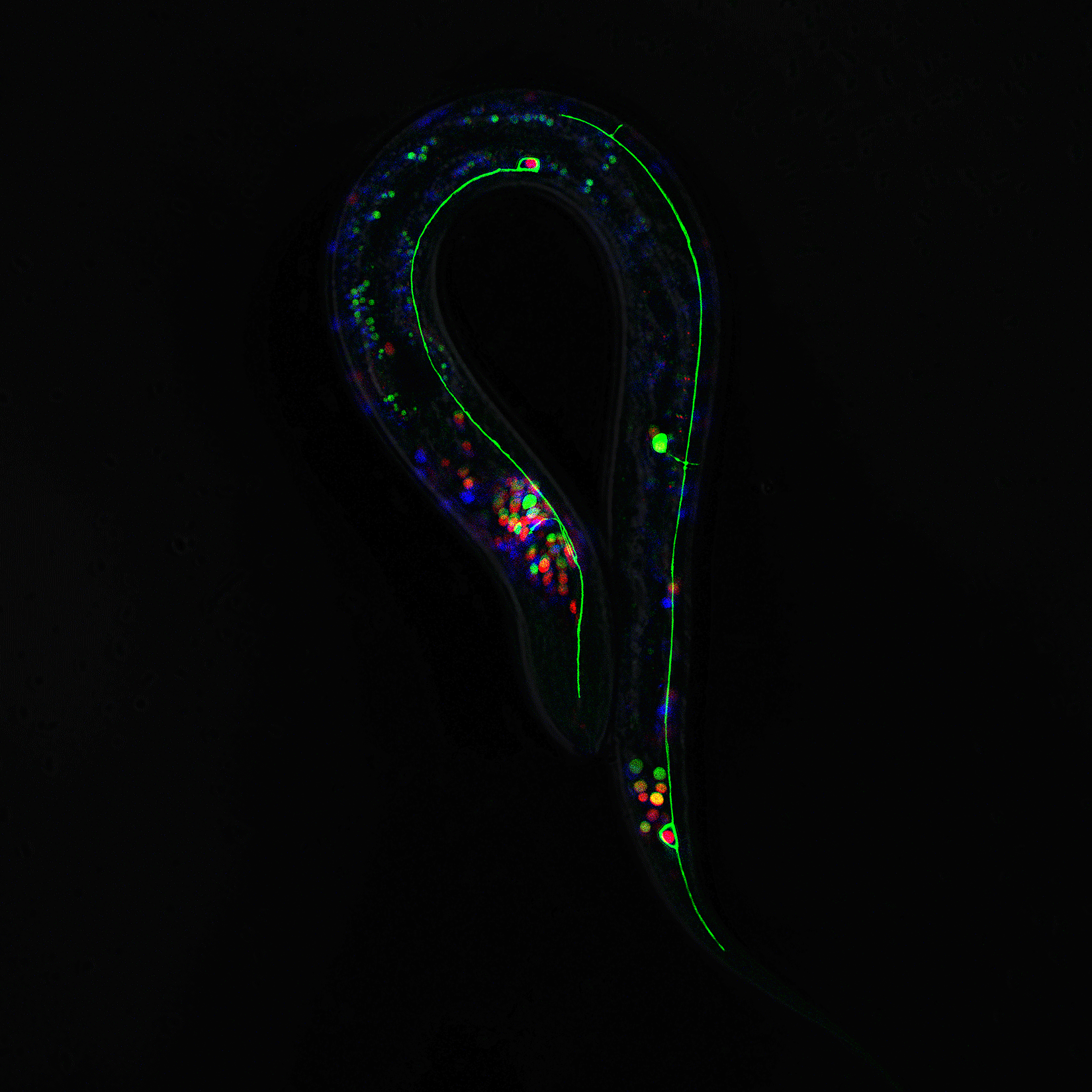
"What is perhaps less appreciated is that biology itself can be incredibly visual and striking. Beneath the surface, an entirely different universe of neurons, molecules and organelles exists, much of it invisible to the naked eye. Advances in microscopy and genetic technologies now allow us to glimpse this hidden world, revealing not only the intricate complexity of biology, but also its unexpected beauty."
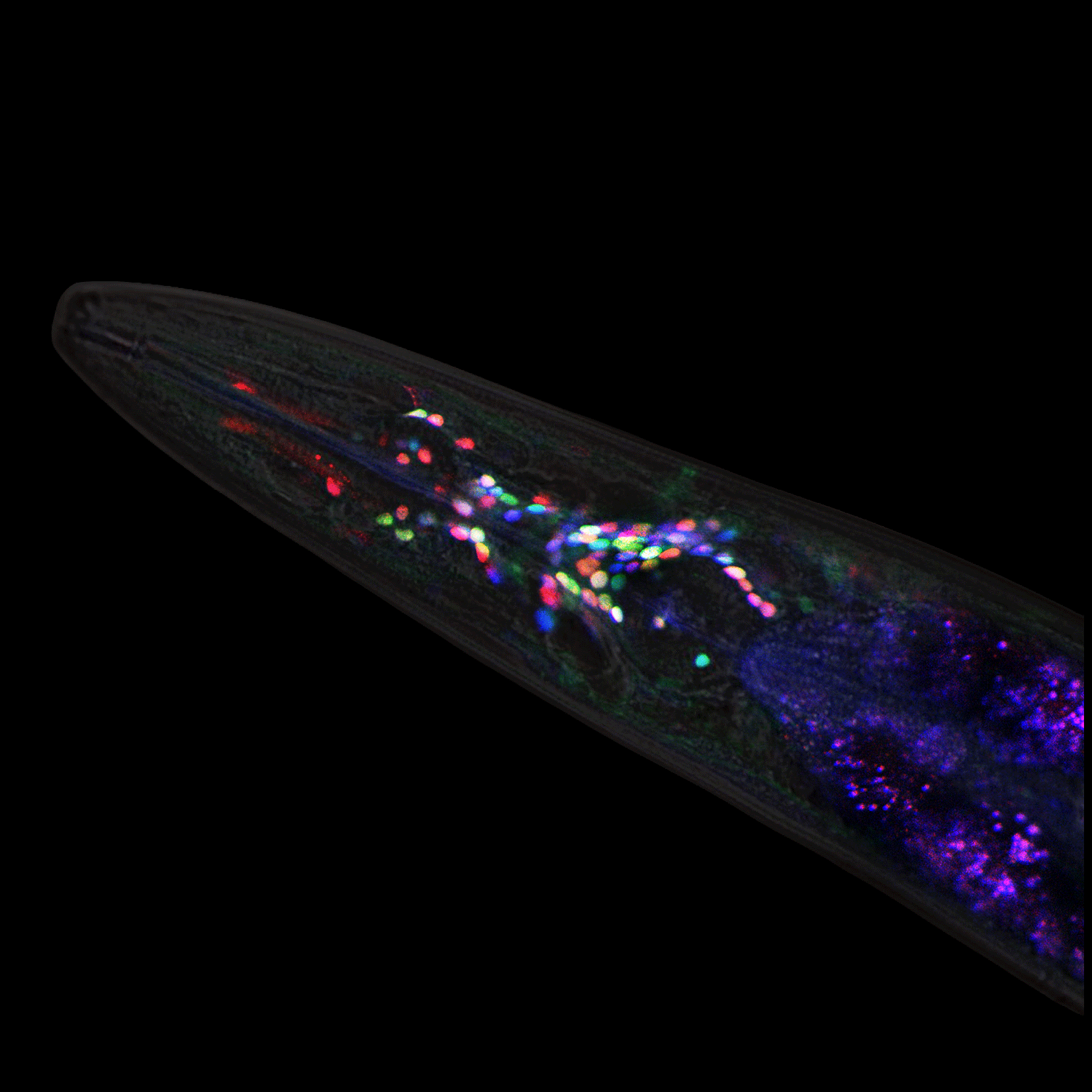
A C. elegans worm expressing a combination of fluorescent reporters in each of its 302 neurons. Also highlighted in green are two of its mechanosensory neurons and their projecting axons.
A multicolored fluorescent map of neurons in the head of a C. elegans worm. C. elegans was the first organism to have its entire 'brain' fully mapped, and this image celebrates the community of human neurons coming together to unravel the worm's neurons.
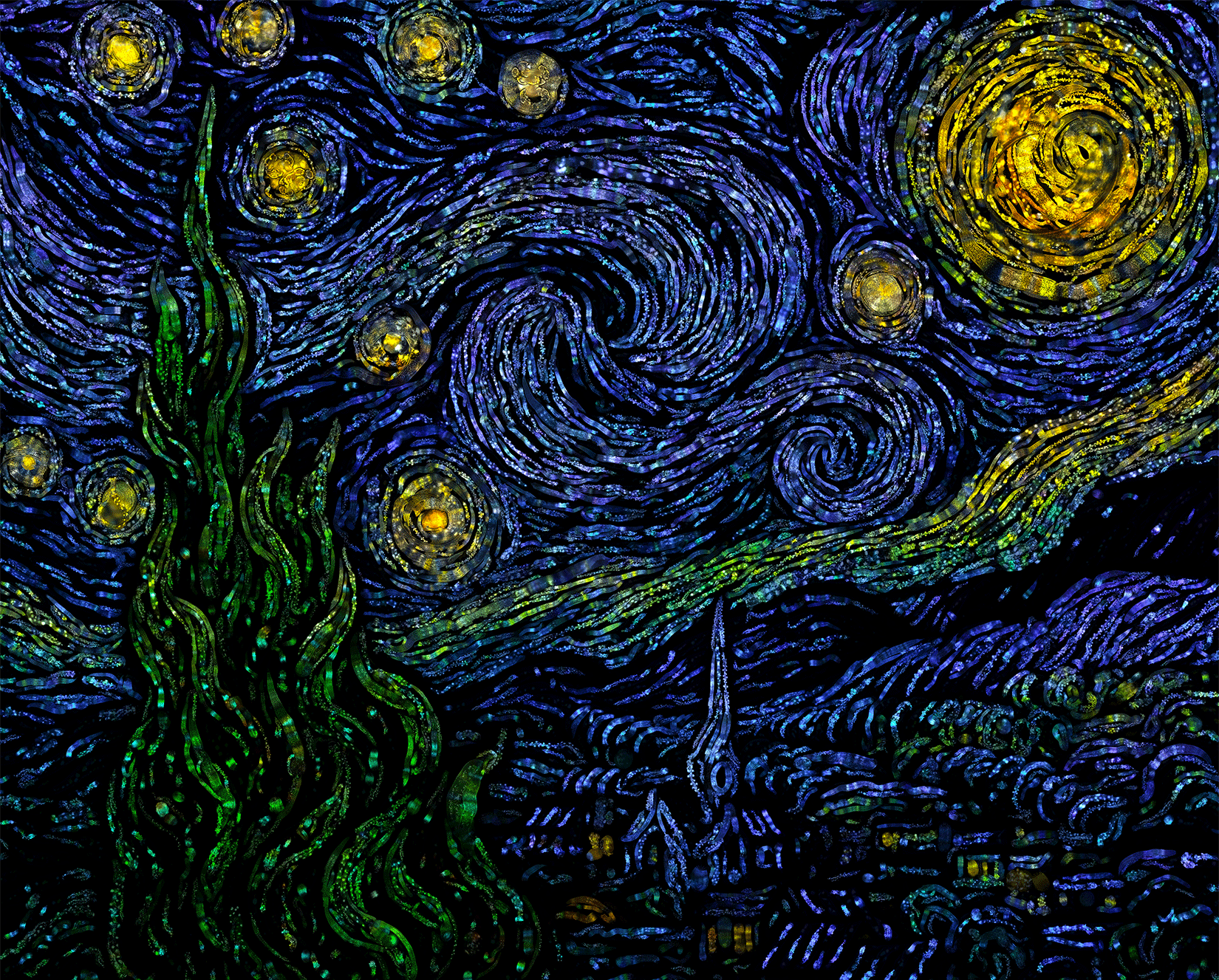
Fluorescent microscopic images of C. elegans worms shamelessly repurposed to recreate Vincent van Gogh's The Starry Night.
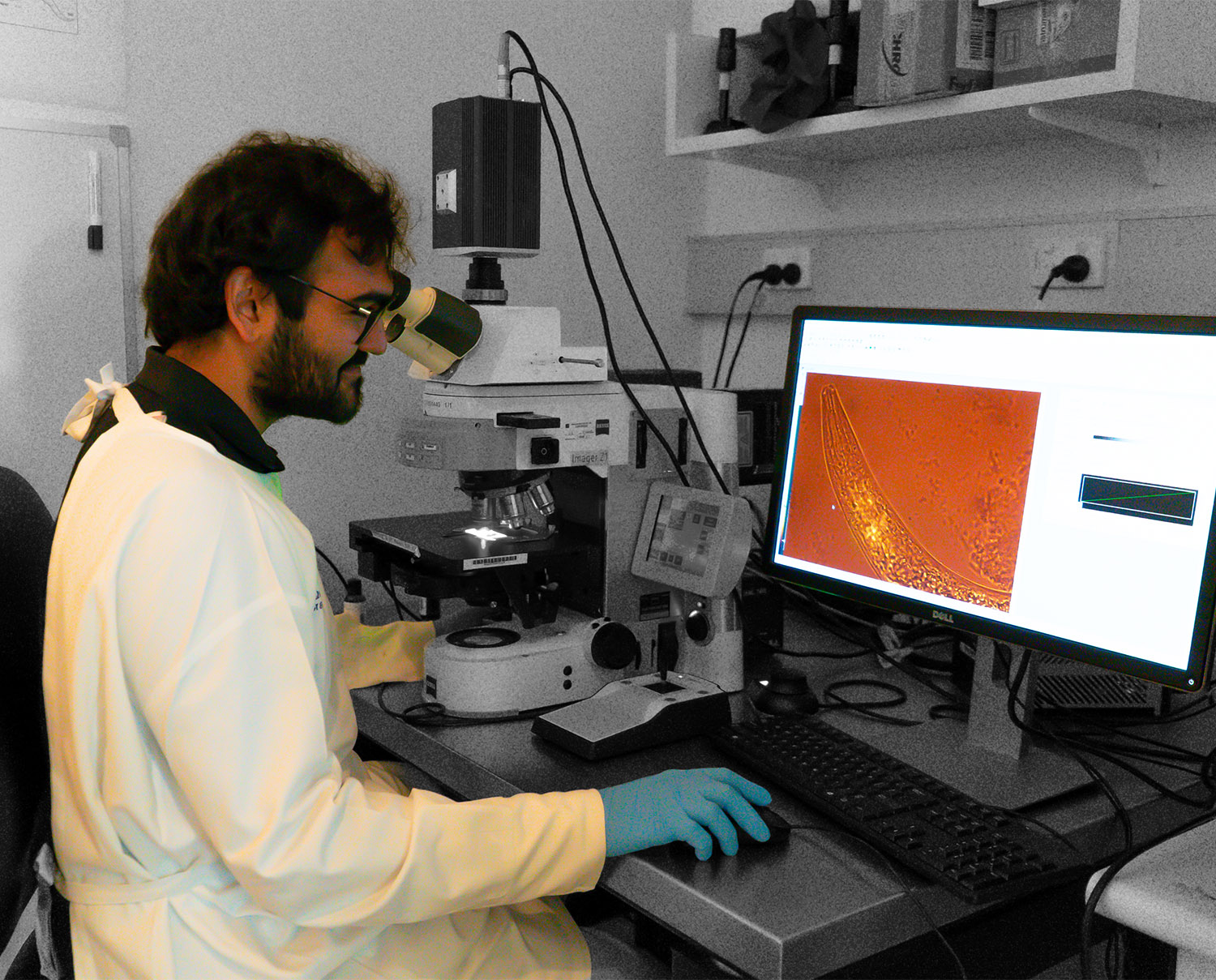
"I am a Research Assistant in Professor Massimo Hilliard’s lab at the Queensland Brain Institute, where I study the molecular mechanisms underlying neuronal regeneration and repair. Alongside my research, I am passionate about science communication and about using creative and artistic approaches to make science more engaging and accessible."