BEAUTIFUL MINDS
Dr Matthew Van De Poll
Posctdoctoral researcher
van Swinderen lab
Queensland Brain Institute
"My works are the crystallisation of a spontaneous idea, one that only exists because of who I am as a person and the skills that I have to bring that idea into fruition."
"Typically, I lean on the side of minimal artistic embellishments, preferring to let the intrigue and wonder of the model or data stand out on its own. I often find when making these pieces that representing the data in these new, artistic ways gives me a new appreciation for what is being shown."
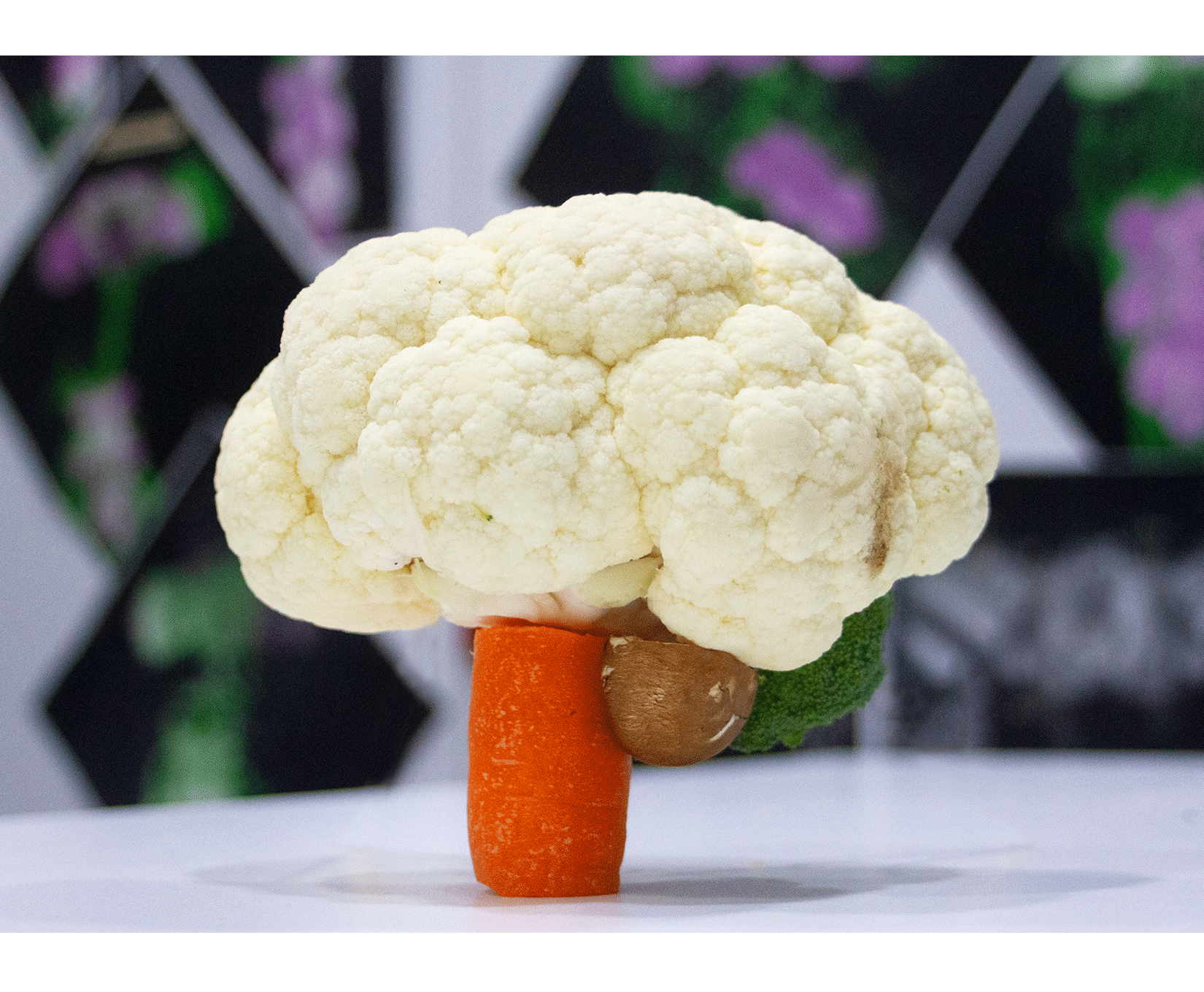
A human brain, amusingly rendered with common vegetables. A potential lesion can be observed in the left Occipital lobe.
The smallest minds can help us understand our own in this collage of Calcium imaging recordings of the brain of the fruit fly Drosophila melanogaster.
This piece is an artistic representation of the human brain, created by collaging optical recordings of the fruit fly brain. Much like a human brain, what stands out immediately are the diverse and distinct regions in the fly brain, each serving their own purpose for the greater whole. Attention is drawn by the rapid shifting of illumination in different recordings, representing patterns of activity traversing the fly brain during the recordings.
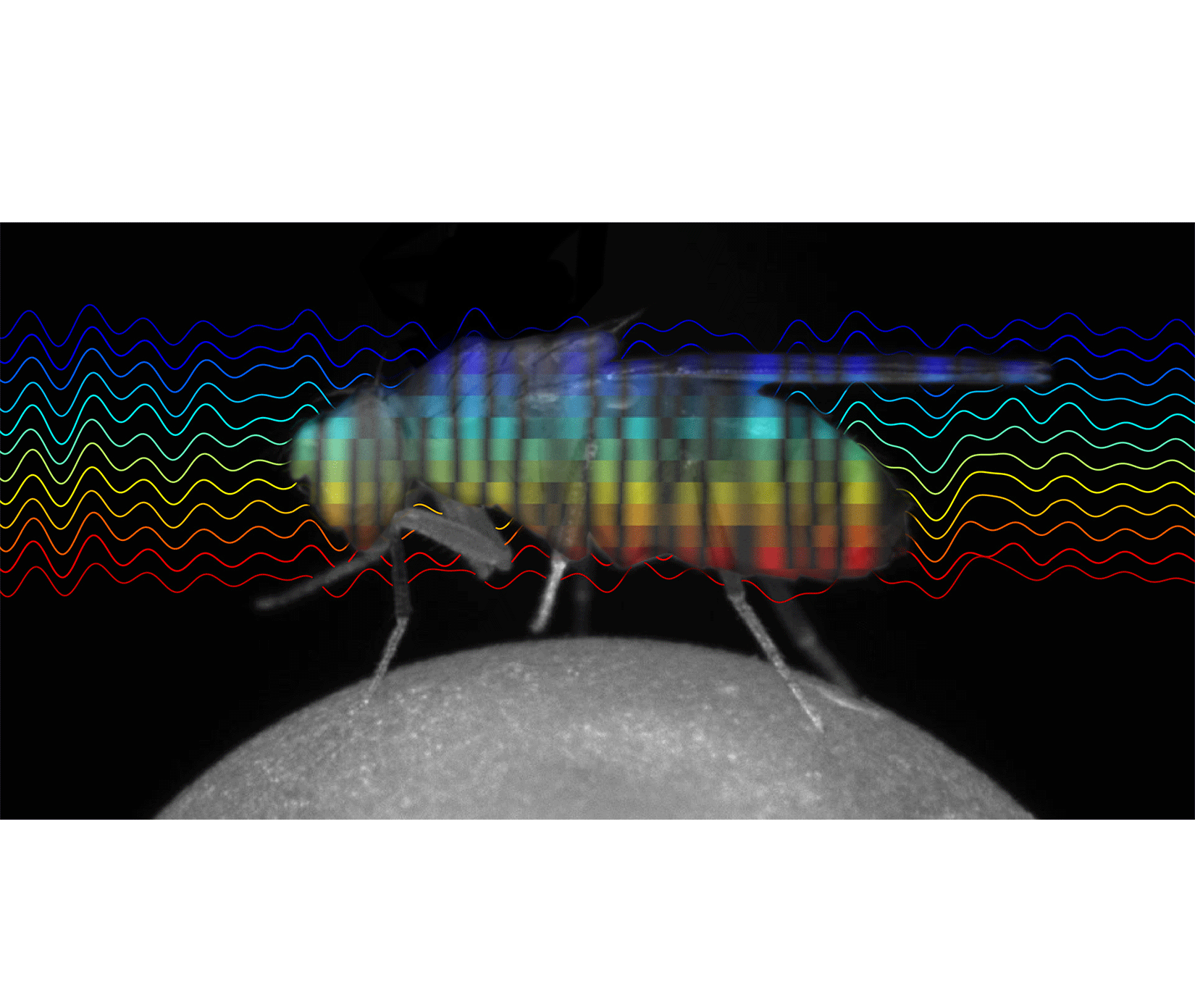
In this piece, a fruit fly walks on an air-supported ball; simultaneously displayed is a rendering of its neuronal activity during this period, as recorded by electrophysiology.
The monochrome nature of the fly and ball stand in stark contrast to the brightcolours of the different channels of the electrophysiology data, which each come from a slightly different position in the fly brain.
The dynamic nature of the fly’s mid-step pose helps to convey the active state of the fly, and how the rapidly shifting neuronal activity probably subserves this locomotion.
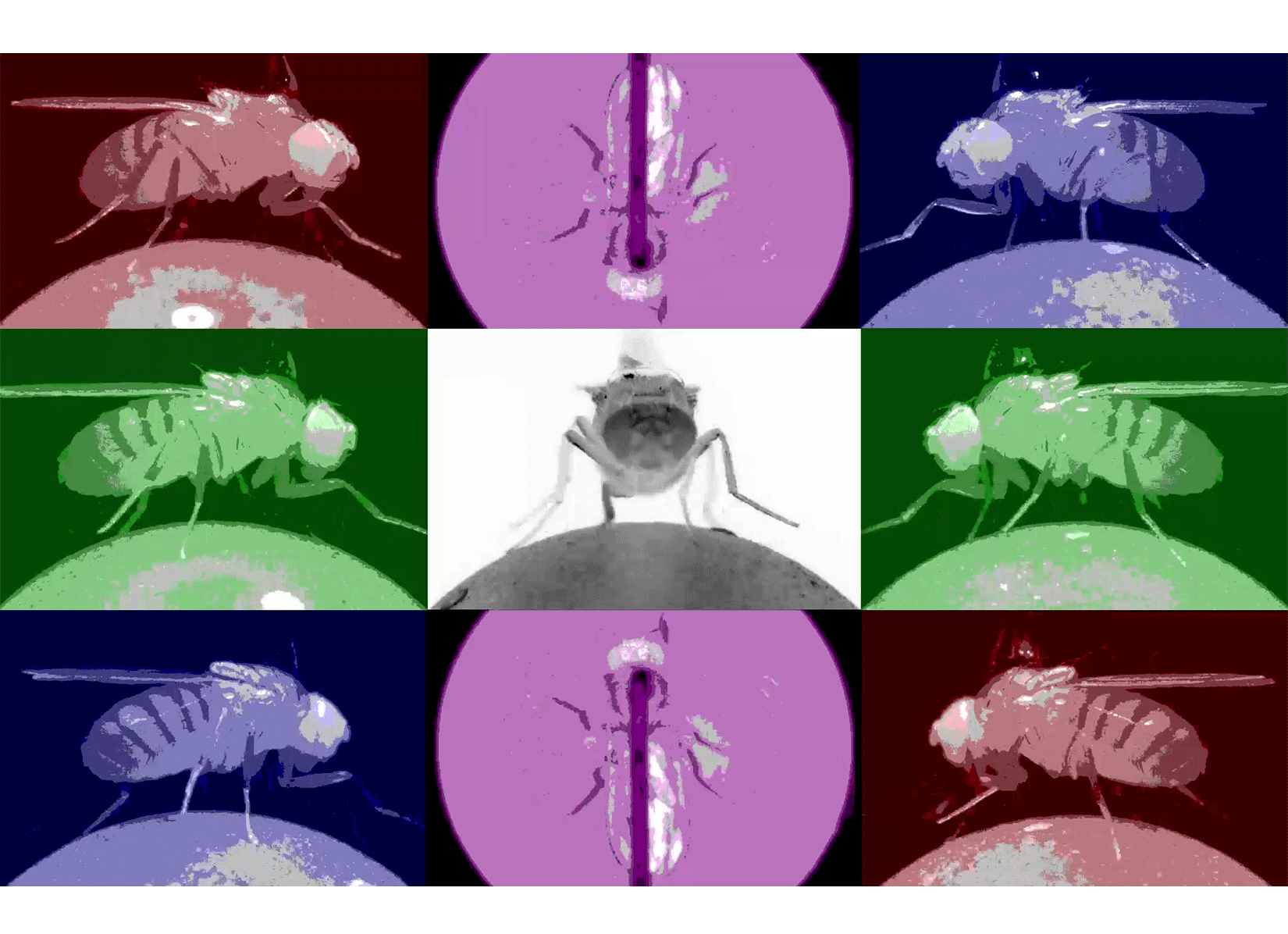
Here we see a Warhol-esque collage of a fruit fly standing on an air-supported ball, imaged from 8 different angles simultaneously.
It is not often that we think about ourselves from every angle, and so the idea here of considering every step in 8x detail is perhaps intriguing.
"In an era of AI, creativity is critical in science because (currently) an AI can never be truly ‘creative’, and so humans are needed to draw that subconscious connection between seemingly unrelated methods or data points, to create a quantum leap that is only obvious in hindsight."
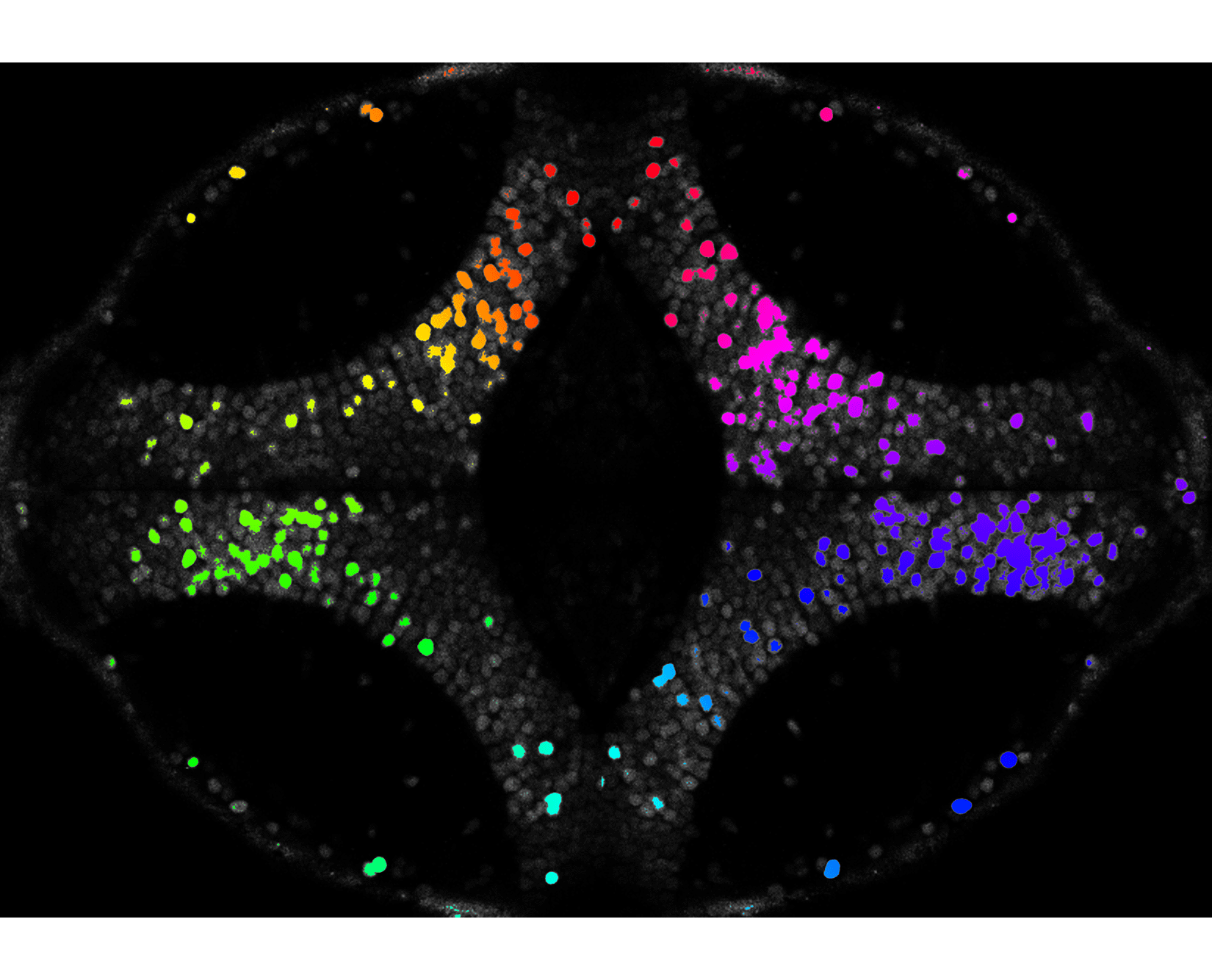
The image symbolises the relationship between science and art; just as our creativity emerges from billions of interconnected brain cells, scientific discovery begins with imagination, and discoveries are built by connecting countless small insights into transformative breakthroughs. It reminds us that the scientific process is not only rigorous and analytical, but also deeply imaginative, celebrating the creativity that lies at the heart of both science and the human experience.
Matt's research
"I currently work as a postdoctoral researcher with the van Swinderen lab. I focus on trying to understand how the brain encodes and processes prediction, since the ability to understand the – sometimes hidden – mechanisms of the world is a key evolutionary capacity."
My research is about trying to understand the human brain by using a much smaller brain, that of the fruit fly Drosophila melanogaster. We use paradigms inspired by human cognitive psychology to see how the fly brain reacts to visual stimuli, seeking to identify the shared evolutionary underpinnings of prediction.
This research focuses on the brain activity associated with prediction in the fly brain and how that changes as the fly moves between sleep and wake. By studying neuronal activity under different states we can understand how sensory information might be ‘gated’ by the brain, and what sort of processing is ongoing even during sleep.




.png)