BEAUTIFUL MINDS
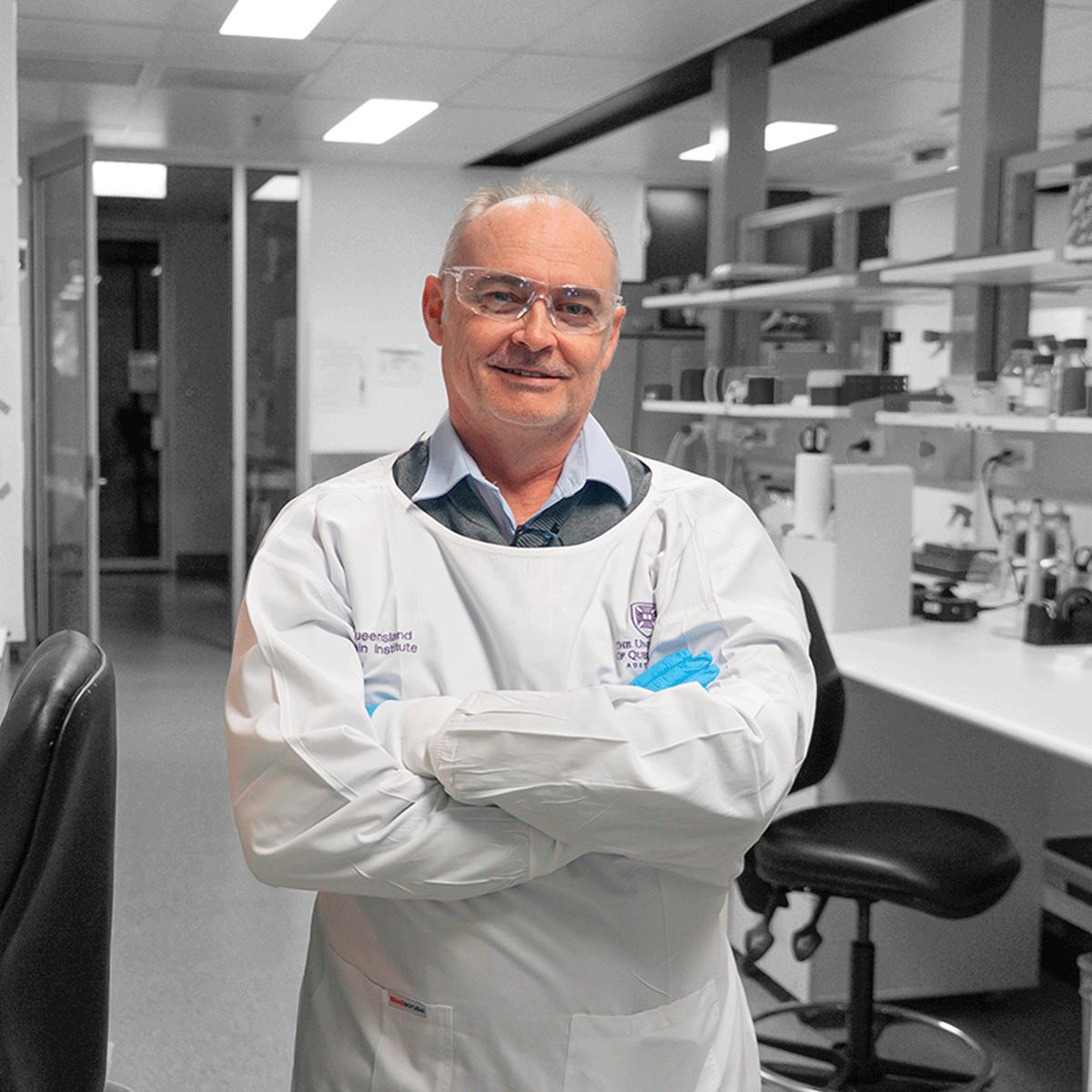
Dr Daniel Blackmore
Research Fellow
Animal Behaviour Facility Manager
Queensland Brain Institute
"I examine approaches to slow or reverse ageing dementia. I take inspiration from all areas of life, and my science career has taken me to places that I never dreamed would be possible."
"We can’ t control how the cells settle onto the microscope slides, how they differentiate and what they will look like. Every time you peer down the microscope it’s a new and exciting experience, and I always feel as though I am looking through deep space to find new, far-off planets and galaxies."
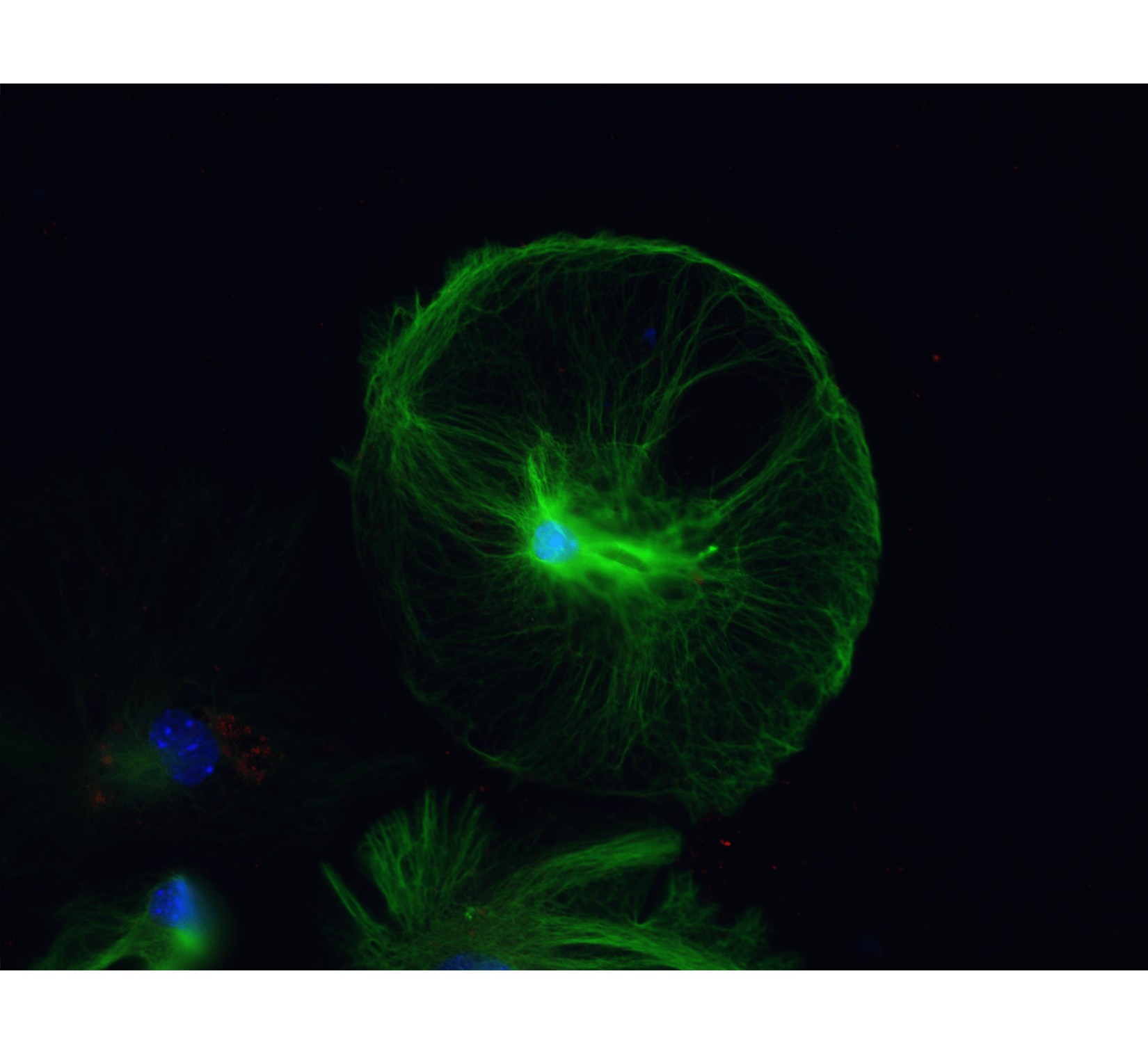
This is an astrocyte from a neurosphere of a very aged animal. When cells are differentiated in a culture dish they produce some spectacular shapes.
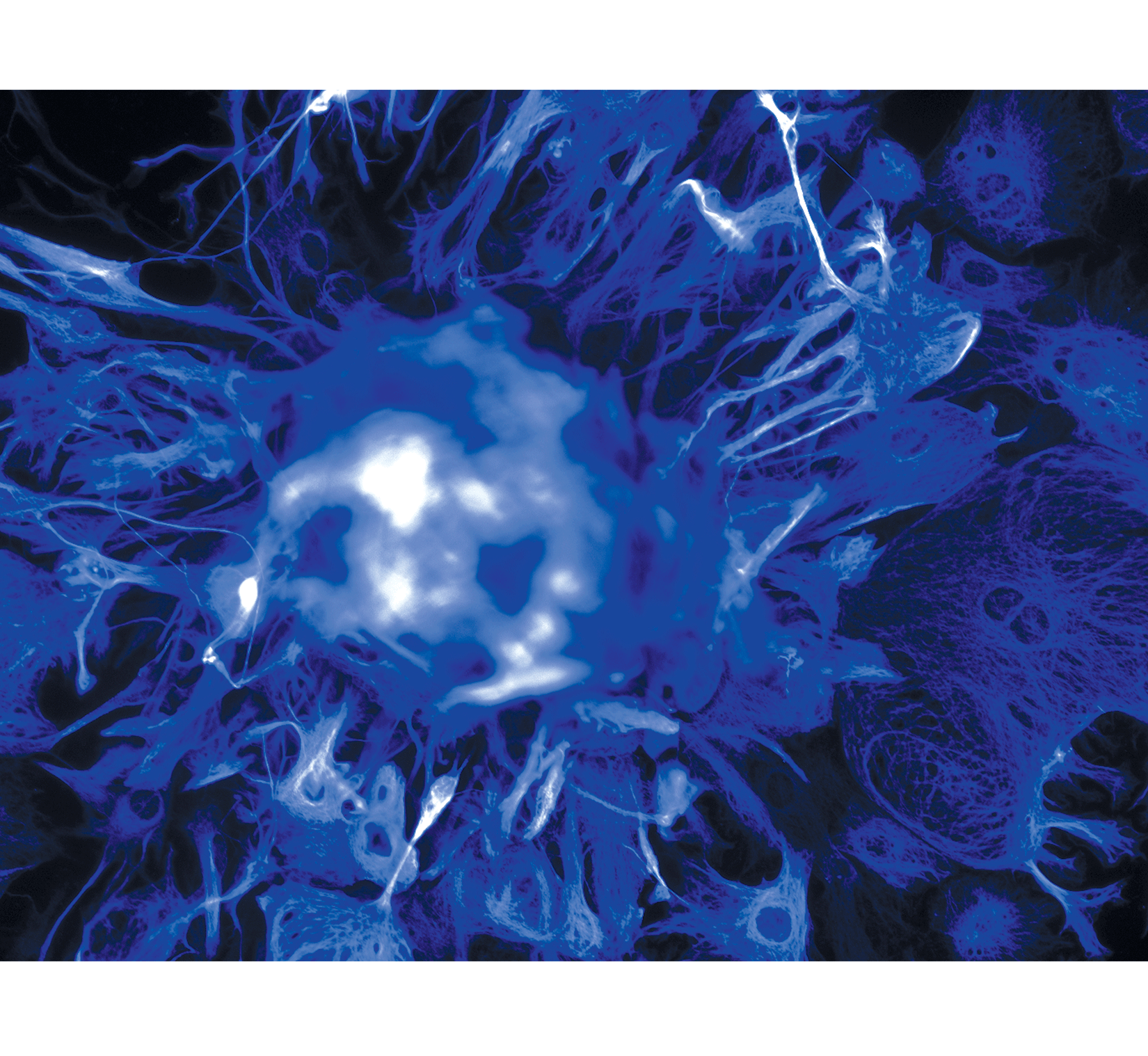
A differentiated neurosphere from aged mice where the channels from the microscope were combined to produce a fusion of colours resulting in this unusual appearance. The very fine morphology in the cells is always beautiful to observe.
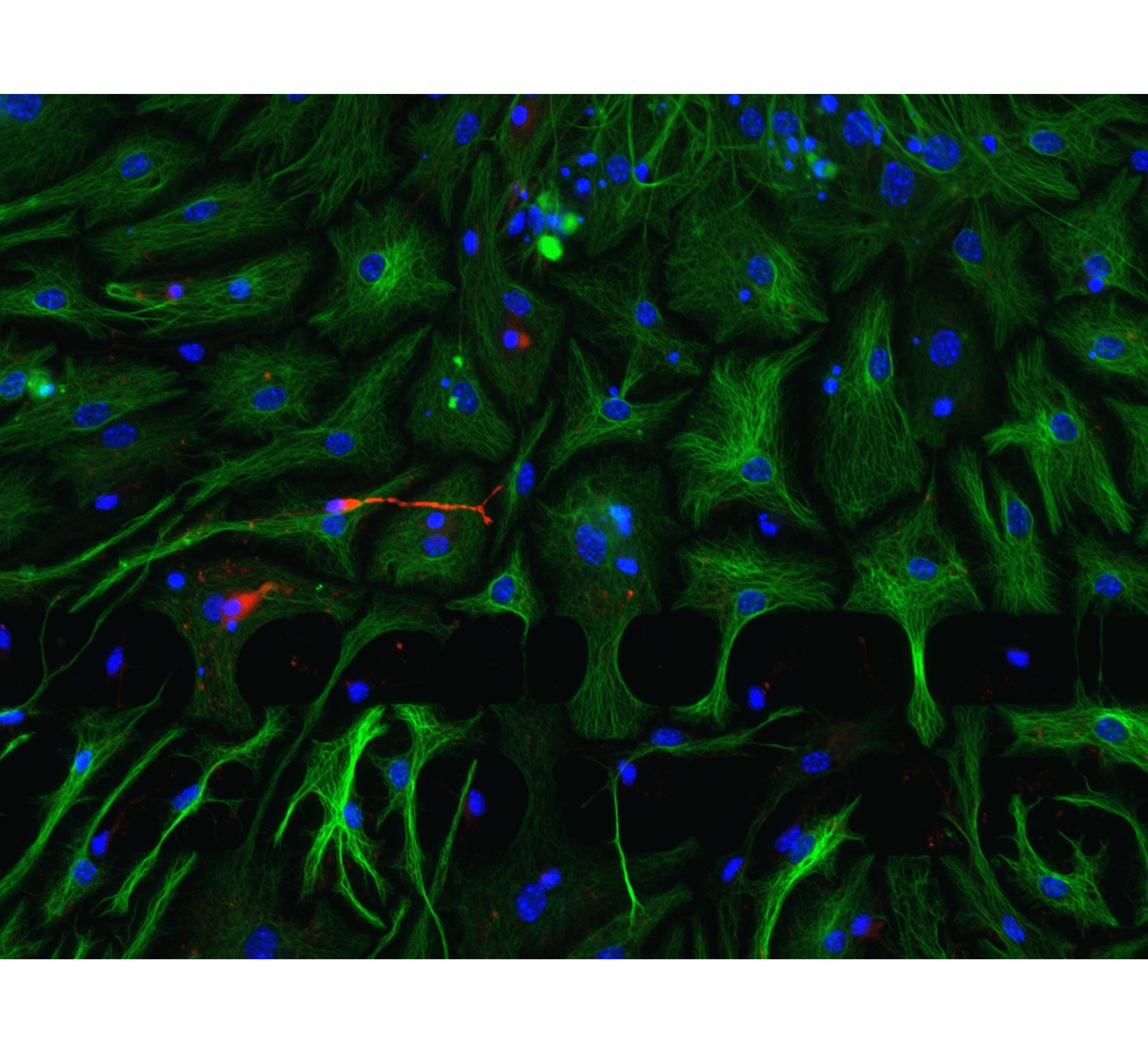
Astrocytes differentiated from aged neurospheres showing some bridging the gap between spheres.
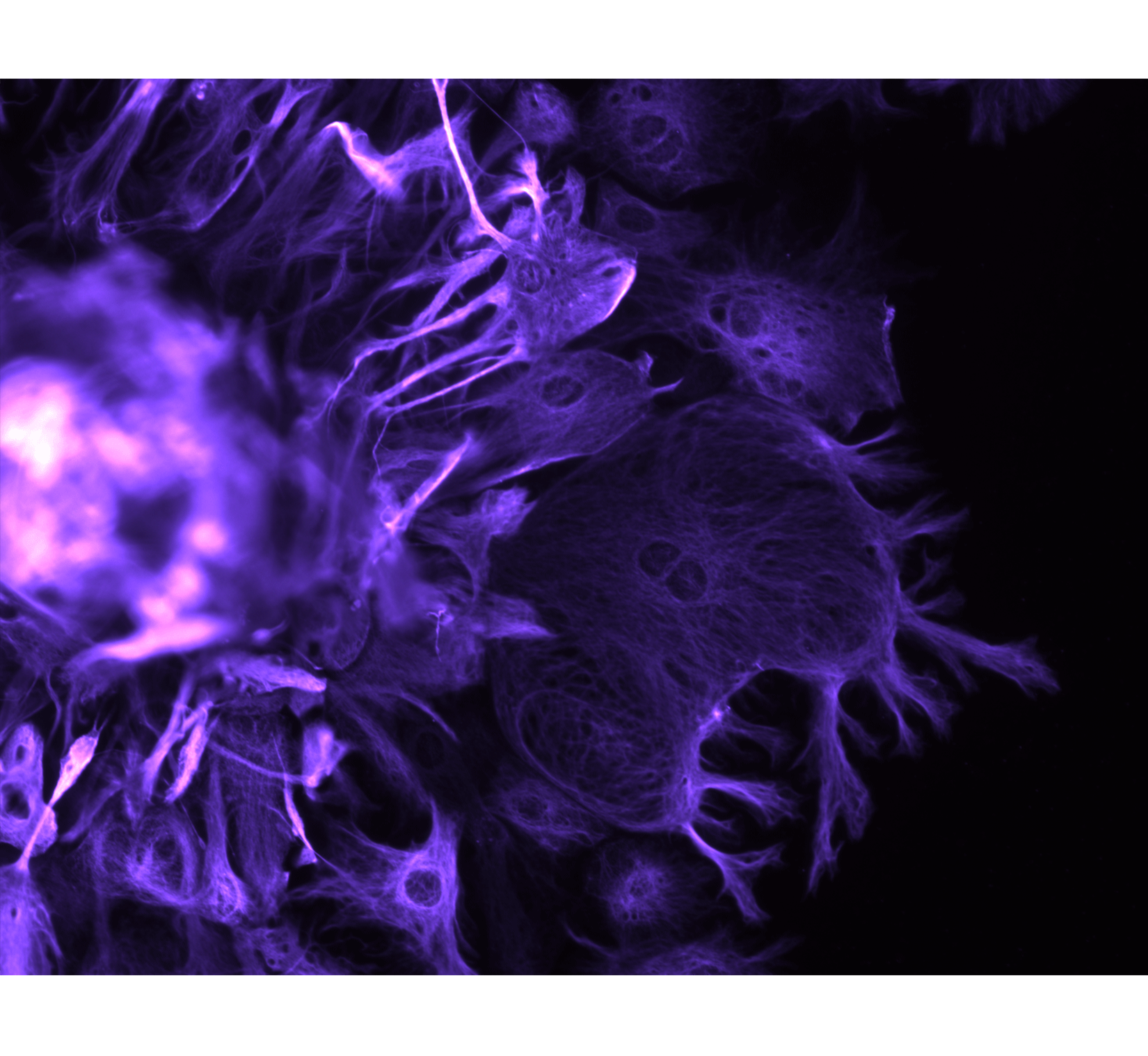
A differentiated neurosphere from aged mice where the channels from the microscope were combined to produce a fusion of colours resulting in this unusual appearance. The very fine morphology in the cells is always beautiful to observe.
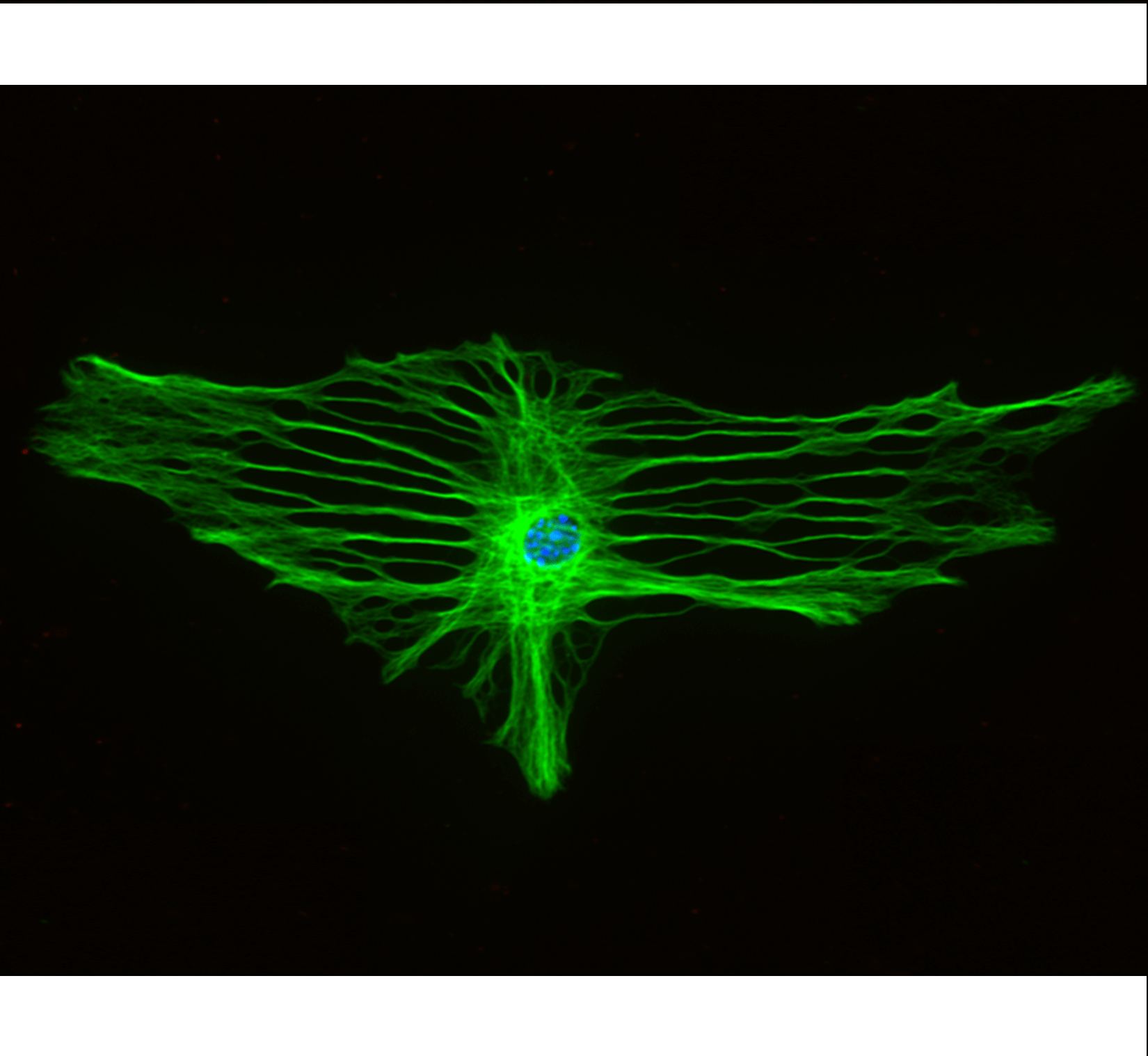
An example of how cells are able to differentiate and produce beautiful morphologies. This has been described as wings, an eye to an alien.
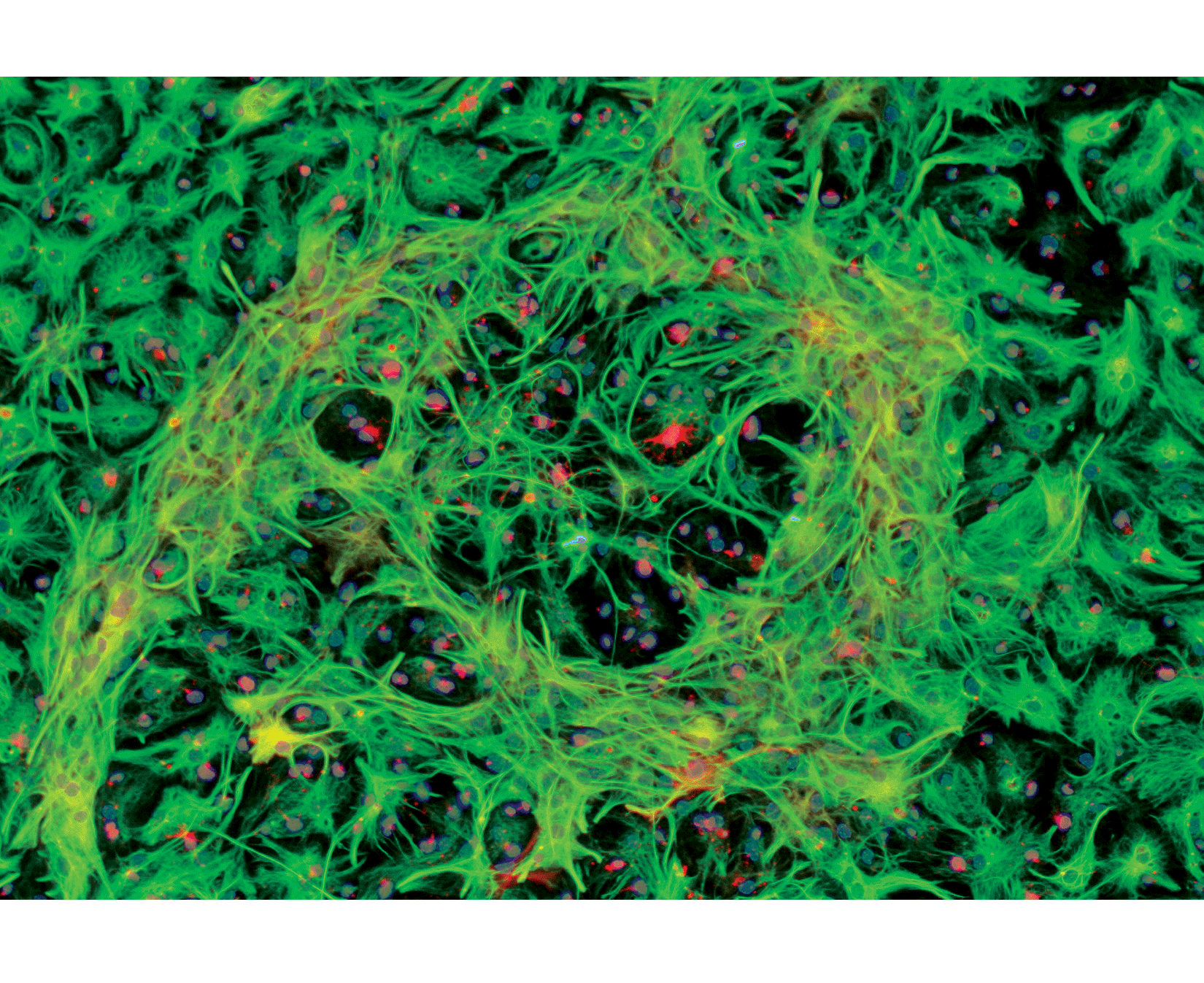
A mass of green astrocytes have differentiated from a neurosphere to produce a spectacular whirl of 3D cells with the occasional red neuron interspersed throughout. I imagine this as looking into some far off galaxy.
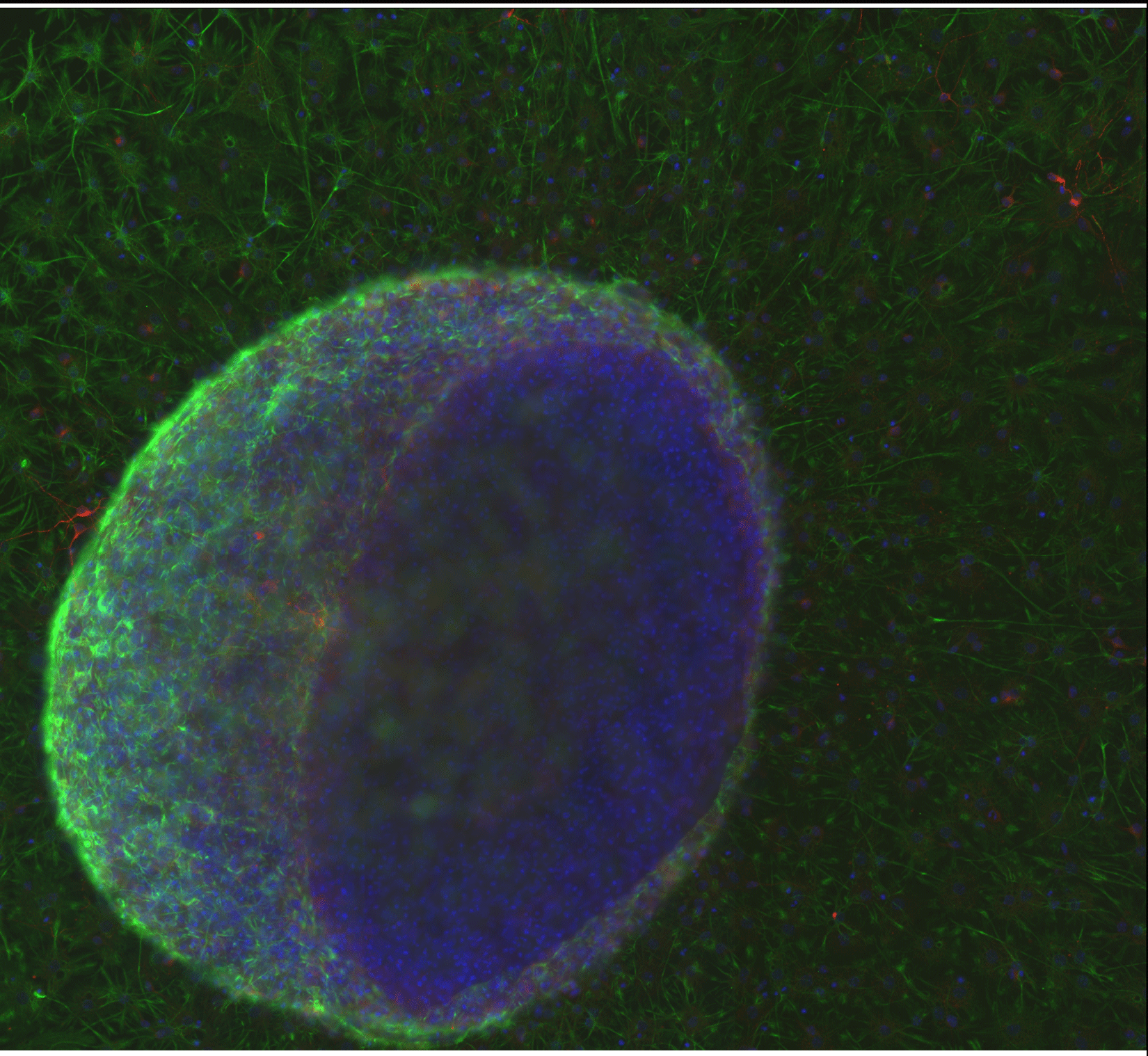
Half a neurosphere from a 24 month old mouse lying on a bed of differentiated neural cells. This sphere formed from only a single cell to produce a large ball comprised of thousands of cells. This image shows the 3D nature of the neurospheres and allows us to catch a glimpse of the internal organisation of the sphere. The astrocytes are green with red neurons and blue is labelling the nucleus of each cell.
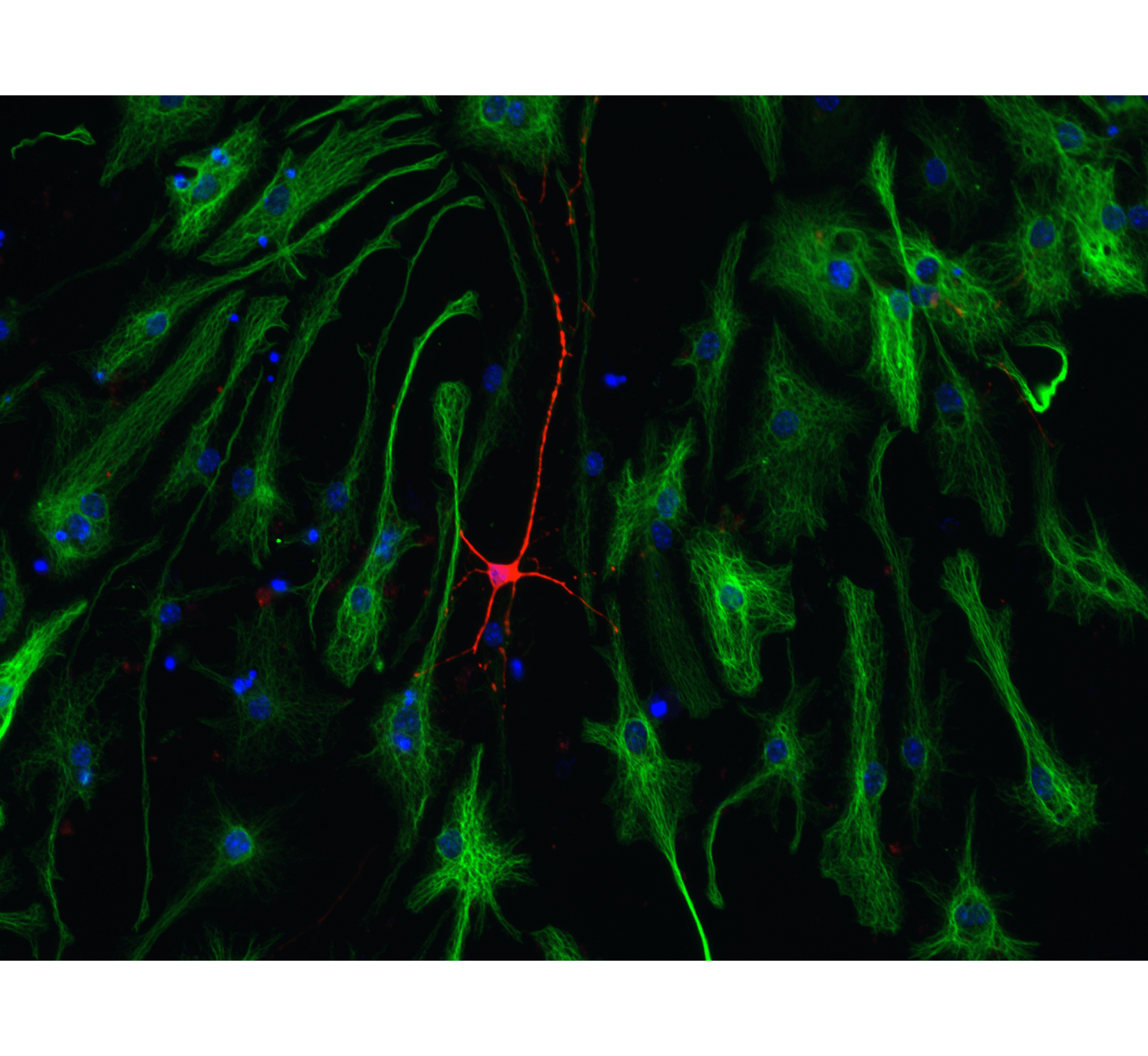
This photomicrograph shows a neuron in red surrounded or hanging within a web of green astrocytes.
Daniel's research
"We have discovered that the ageing brain possesses neural stem cells that are able to produce new nerve cells that are critical for learning and memory. Discovering approaches to activate these stem cells is critical to prevent dementia and is the focus of my research."
I am a postdoctoral researcher who examines approaches to slow or reverse ageing dementia. I take inspiration from all areas of life, and my science career has taken me to places that I never dreamed would be possible. The brain is a wonderous organ and every day we are making new discoveries that will one day help everyone live better, healthier lives. I’m proud of what I do and I am excited to see realprogress being made.




.png)