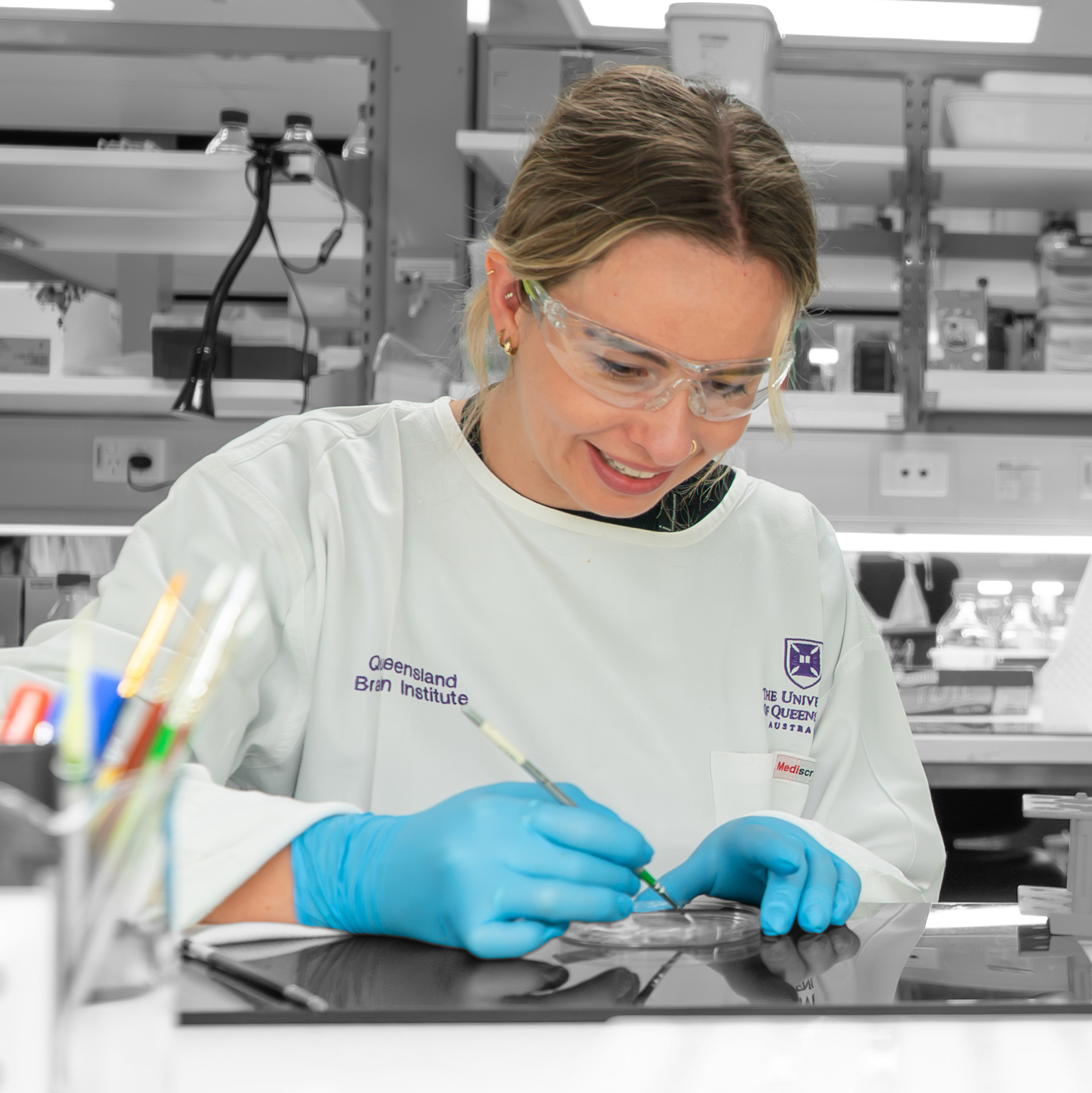
Dr Alison Carlisle
Postdoctoral researcher
Walker lab
Queensland Brain Institute
"My research explores how adult neurogenesis, neuroinflammation and signals from the body influence brain health during ageing and Alzheimer's disease."
Postdoctoral researcher
Walker lab
Queensland Brain Institute
"My research explores how adult neurogenesis, neuroinflammation and signals from the body influence brain health during ageing and Alzheimer's disease."
"I've always loved microscopy – the ability to uncover the secrets and beauty of minute biology that would otherwise remain invisible. Through the microscope, the brain transforms from an abstract organ into a breathtaking landscape of delicate architecture and extraordinary complexity."
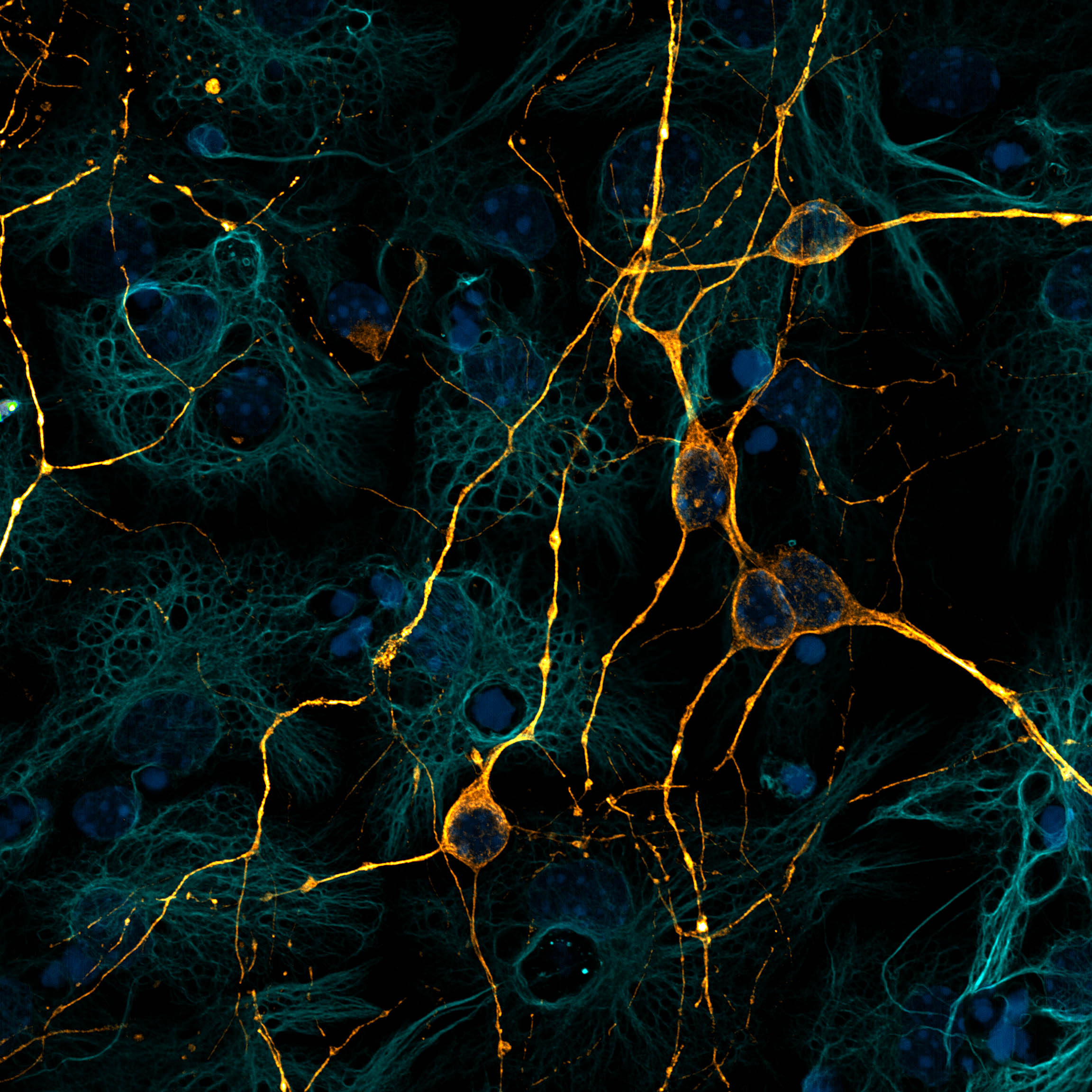
Like the Japanese art of Kintsugi, which repairs broken ceramics with golden joinery, newborn neurons (gold) aided by astrocytes (cyan), reconnect brain circuitry to restore function and thought.
The image symbolises the relationship between science and art; just as our creativity emerges from billions of interconnected brain cells, scientific discovery begins with imagination, and discoveries are built by connecting countless small insights into transformative breakthroughs. It reminds us that the scientific process is not only rigorous and analytical, but also deeply imaginative, celebrating the creativity that lies at the heart of both science and the human experience.
"The luminous gold cells are neurons, extending delicate branches through a network of blue astrocytes - support cells that nurture and protect the brain. Together, they create the intricate connections that enable thought, memory, and creativity. "
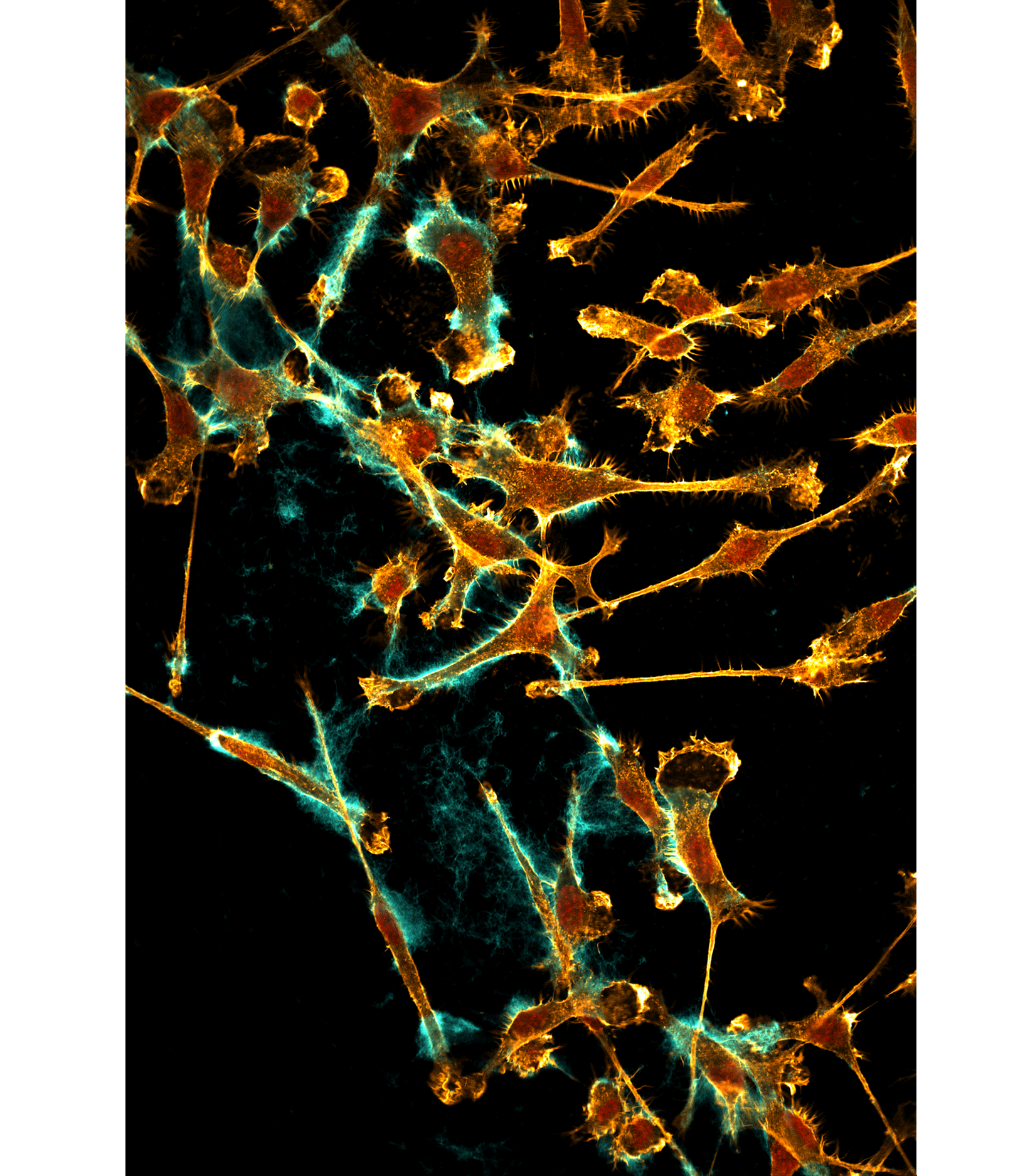
Microglia, the brain's immune cells, become chronically activated in respond to amyloid-β pathology (blue ice), driving neuroinflammation (fire), which fuels the progression of Alzheimer's disease.
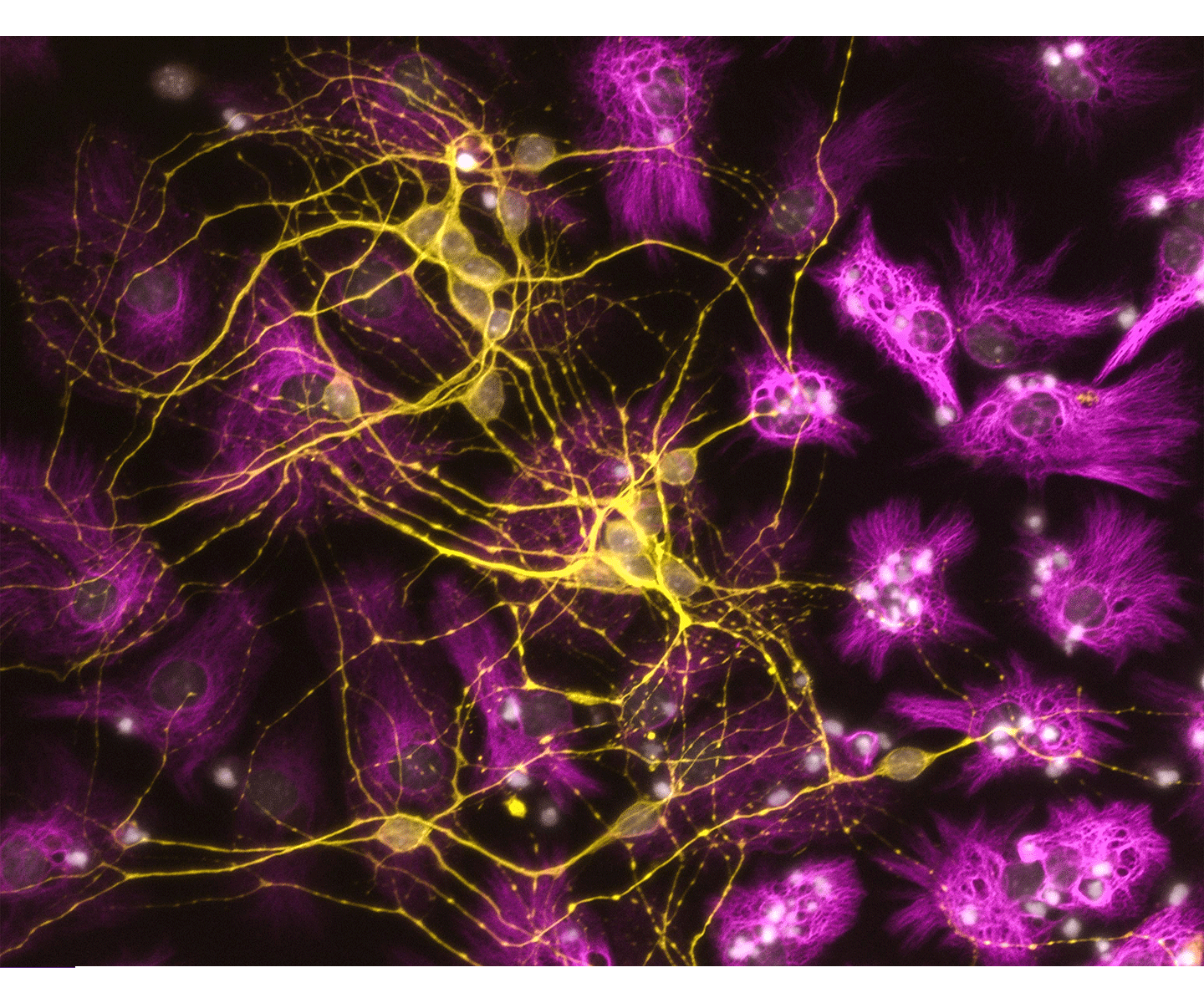
Neural stem cells lying quiescent in the hippocampus begin to differentiate, when induced, along either glial (magenta) or neuronal (yellow) trajectories.
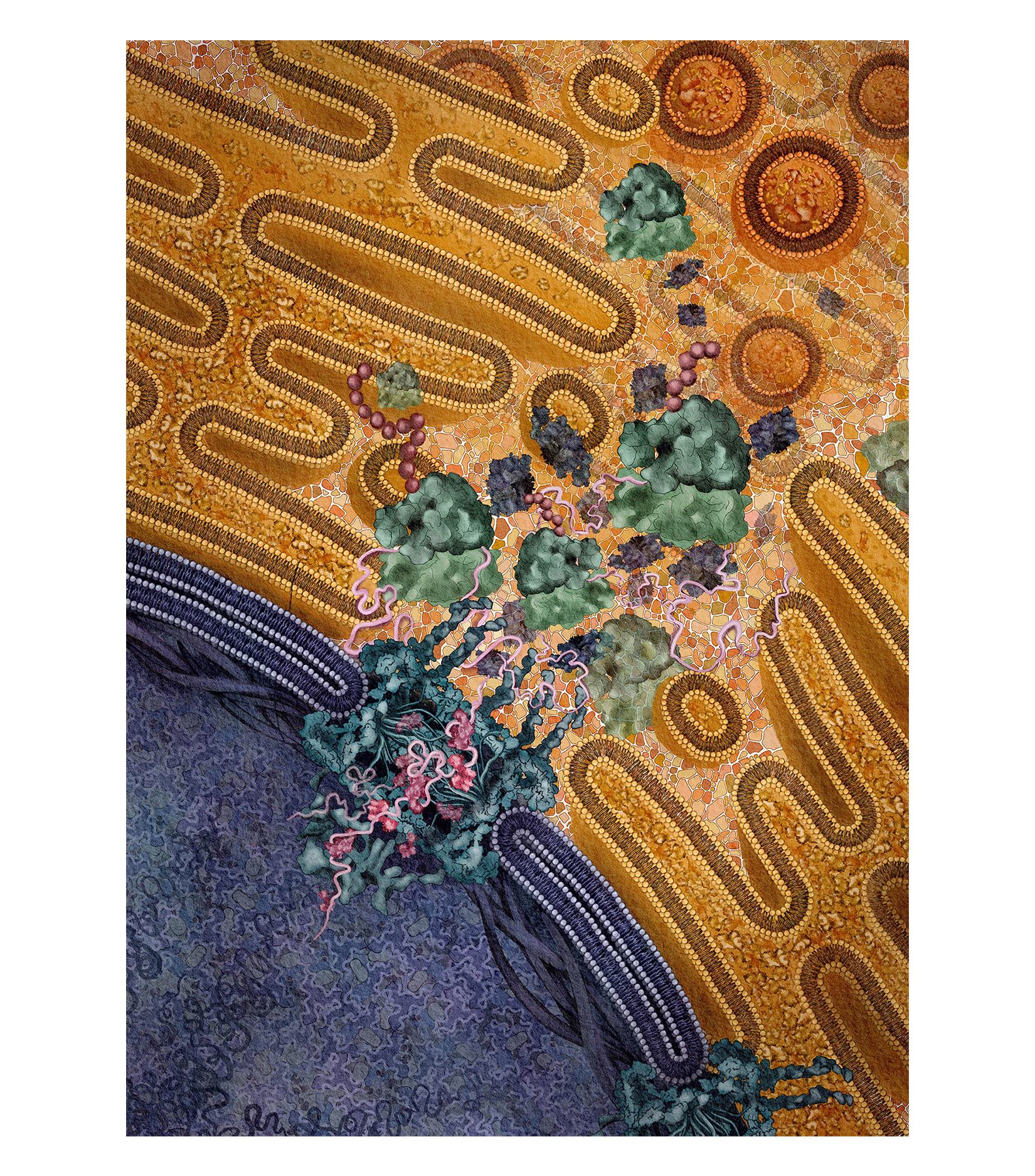
The image symbolises the relationship between science and art; just as our creativity emerges from billions of interconnected brain cells, scientific discovery begins with imagination, and discoveries are built by connecting countless small insights into transformative breakthroughs. It reminds us that the scientific process is not only rigorous and analytical, but also deeply imaginative, celebrating the creativity that lies at the heart of both science and the human experience.
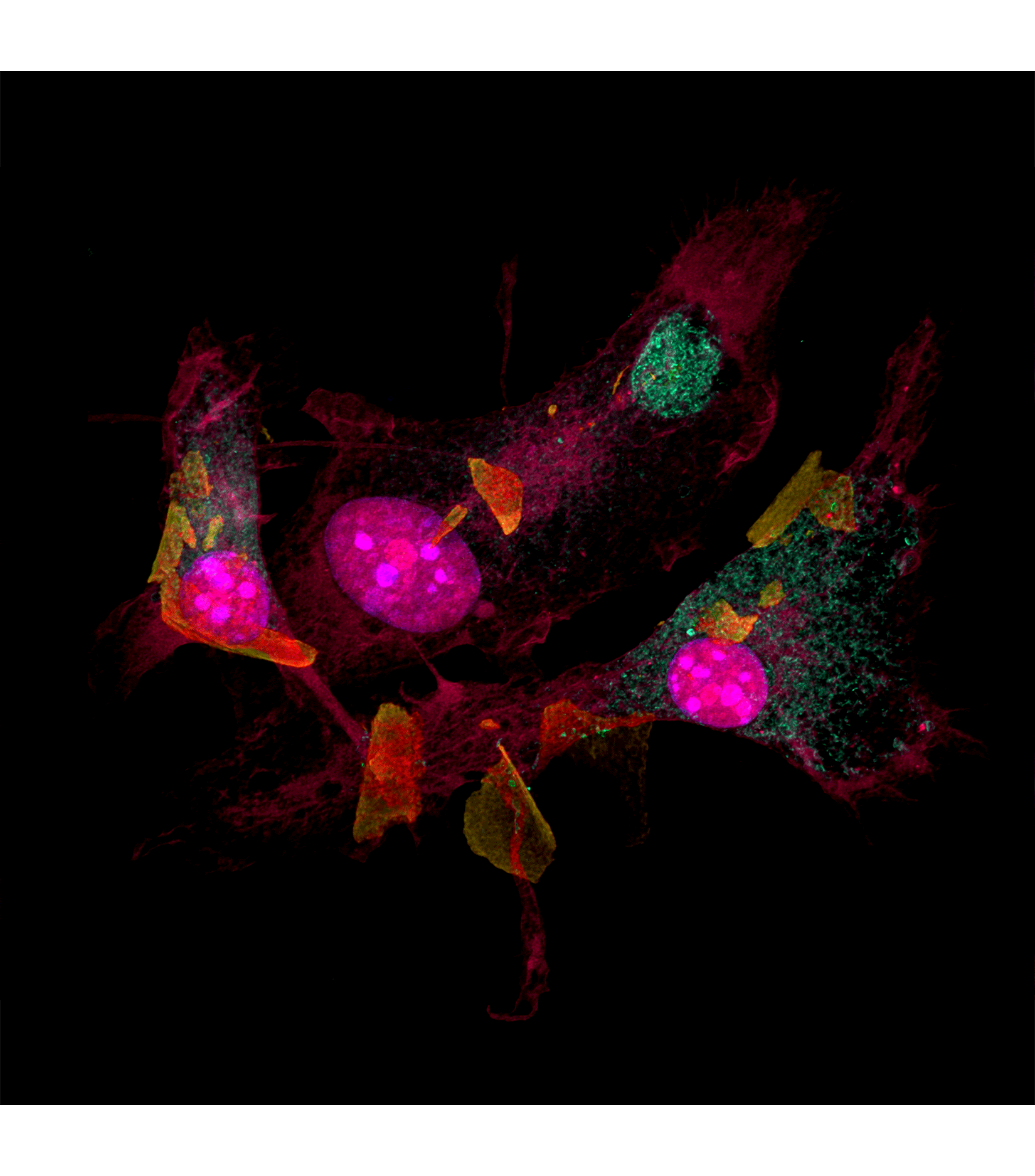
The complex and dynamic network of proteins within microglial cells provides a glimpse into their inner workings as the immune sentinels of our brains.
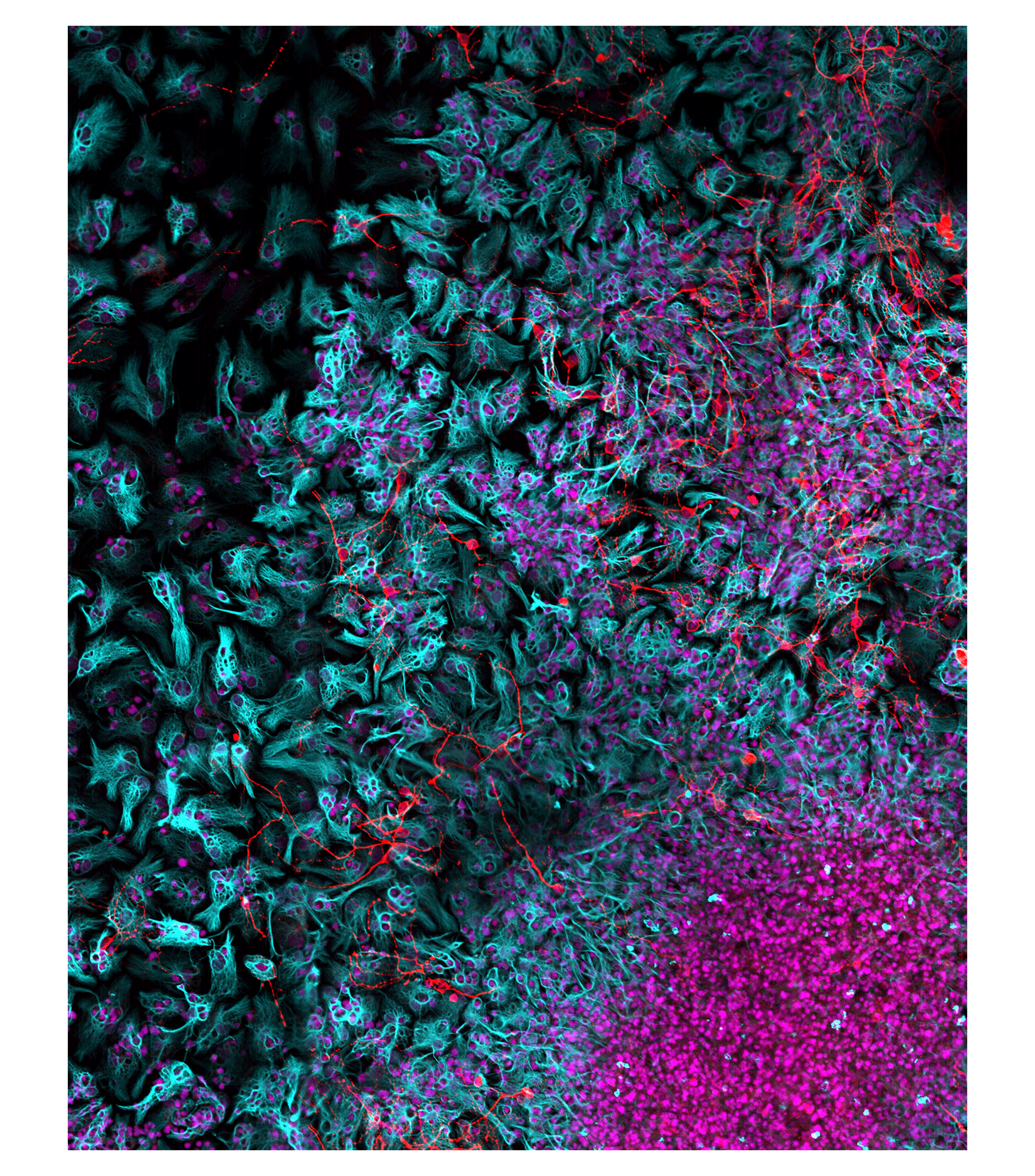
As neurons (red) and astrocytes (cyan) flow outward from a tiny neurosphere grown from a single neural stem cell, they weave an intricate network of communication and connection. These neurospheres allow us to glimpse the brain’s remarkable ability to renew itself and guide our exploration of the forces that shape brain rejuvenation.
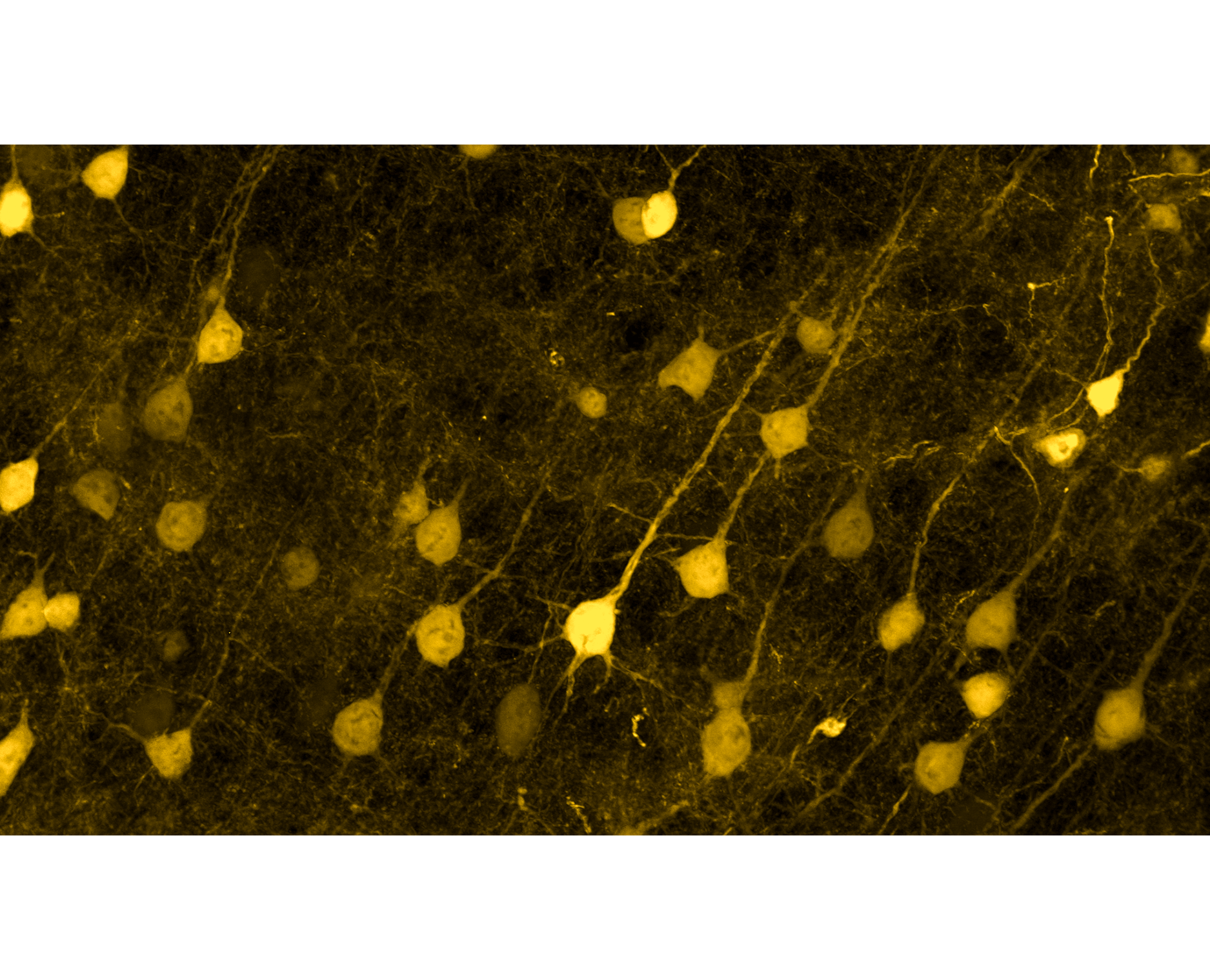
Like embers glowing in a darkened field, neuronal somas burn bright in a predetermined architecture across the cortex. Their arrangement reflects the exquisite organisation of the brain, where millions of such cells work together to create thought, memory, and perception.
I am a Postdoctoral Research Fellow at the Queensland Brain Institute, working in Associate Professor Tara Walker's Systemic Brain Rejuvenation Laboratory. My research explores how adult neurogenesis, neuroinflammation and signals from the body influence brain health during ageing and Alzheimer's disease.
I am driven by a fascination with the brain's remarkable capacity to adapt and repair itself, and I feel incredibly fortunate to work alongside a team of passionate scientists striving to unlock a few of its many remaining mysteries. Understanding how we can rejuvenate or repair the brain begins with understanding how it is built. Most people believe we are born withall the brain cells we will ever have. In fact, some regions of the brain continue to produce new neurons throughout adulthood in the process of adult neurogenesis.
Understanding how this remarkable process works - and why it declines with age and in neurodegeneration - is at the heart of my research.




.png)